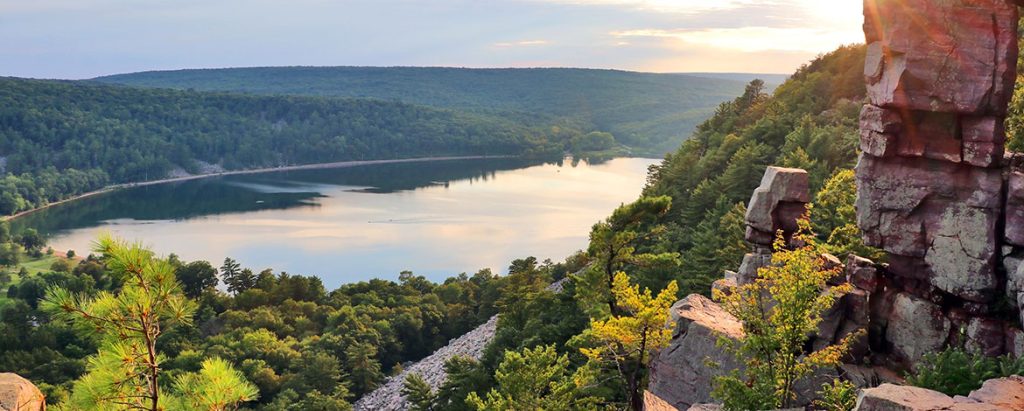
Devil’s Lake
TTP Devil’s Lake Outing
Saturday, September 12th
The Transfer Transition Program is organizing a day trip to Devil’s Lake. Join us for an eventful day in the sun as we go on an optional hike with a naturalist. Take a dive in the clear waters or rent a kayak or paddleboard and create your own adventure on the lake. Chill out on the shore and play some lawn games as we cook up some food on the grill. Alternatively, check out the nature center and learn about the geographical and indigenous history of the land. The concession stands of Devil’s Lake sell hot food and even provide vegetarian and vegan options.
Pick up/Drop off: Chazen Art Museum (map)
Departure: 7:45 AM | Return: 5:00 PM
Pre-registration required.
Note: There is a $ fee for this event. If $ is stretching your budget, we are happy to waive the fee. No explanation is needed; we will only ask you to share your first & last name and wiscmail. Please email transfer@studentaffairs.wisc.edu to request a fee waiver.
Important Information
Devil’s Lake has limited cellphone reception, so website may lag to load. We recommend screenshotting the following information.
Contact Information
TTP: (608) 690 -6620
Park Ranger: 608-356-8301
Devil’s Lake State Park: (608) 356-8301
DNR: (800) 847-9367
In emergency, always call 911.
The following items may be weather dependent. Checking the weather in Baraboo, WI in the morning before departure.
Pack regardless of weather:
- backpack/daypack
- large water bottle
- bug spray WITH DEET (bug spray without DEET will not protect against ticks)
- sun protection: hat, sunscreen, sunglasses
- hiking boots or sneakers (preferably with laces to secure snug fit)
- If needed: EPIPEN, inhaler, other necessary medication(s)
- Valid ID
(necessary if you want to rent kayaks, paddleboards, etc.) - snack for trail hike such as granola or protein bar
- portable charger/cords for phone or watch
Consider packing for changing weather:
- layered clothing
- base layer: t-shirt (preferably moisture wicking)
- mid layer: long sleeve, thicker sweatshirt
- outer layer: water proof / wind resistant
- pants (protect from mosquitos and ticks)
- breathable socks (extra pair if raining)
- if chilly: coverage for ears/hands
TTP will be brining the following items (but will have limited supply of sunscreen & bug spray).
- limited: generic sunscreen & bug spray
- first-aid kit
- barbeque food such as brats (including vegetarian) and sides
- snacks such as granola/protein bars
- extra water
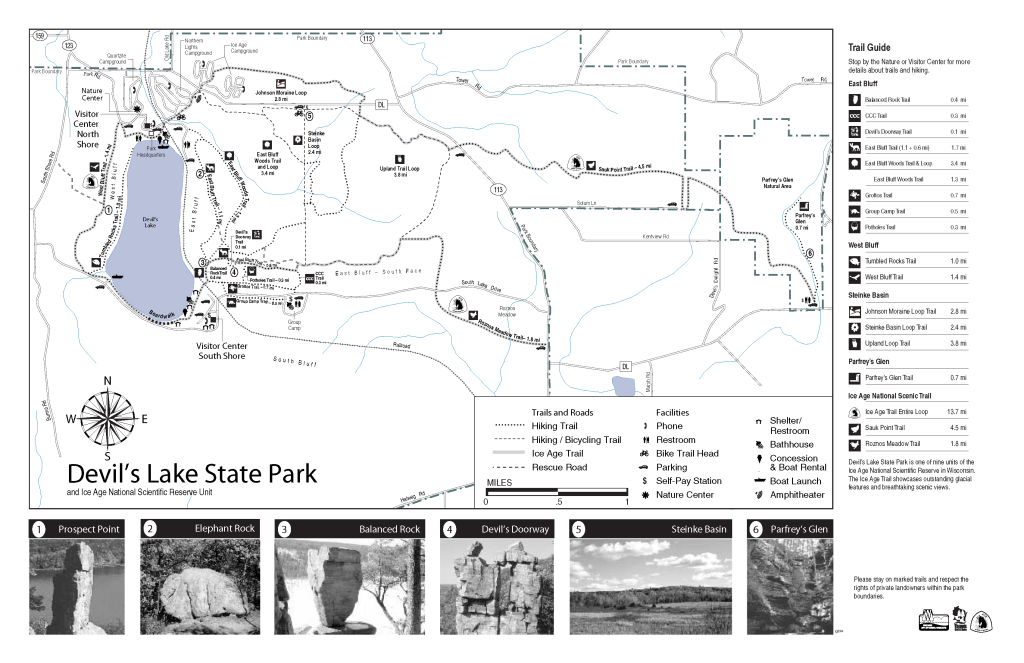
- printed maps of park and trails
- lawn games, cards, blankets
You are welcome to bring your own lawn chair or blanket.
Be respectful of the land and other hikers.
Below are a few unwritten rules among the hiking community and can help make your hike and the hike for others more pleasant.
- Don’t toss your trash – not even biodegradable items such as banana peels. It is not good for animals to eat non-native foods and who wants to look at your old banana peel while it ever-so-slowly decomposes? If you packed it in, pack it back out.
- Respect the sounds of nature. Speak in low voices and turn your cell phone down, if not off. Enjoy the presence of peace and let others do the same.
- Hikers going downhill yield to those hiking uphill.
- If taking a break, do not obstruct the trail and ensure people can easily pass.
- If hiking in a group, don’t take up the whole width of the trail; allow others to pass.
- Walk through the mud or puddle and not around it, unless you can do so without going off the trail. Widening a trail by going around puddles, etc. is bad for trail sustainability. Just because it looks easy to cut the corner off of a switchback doesn’t mean it is a good idea. Help preserve the trail by staying on the trail.
- Don’t feed the wildlife. While many animals stay hidden, others are not so shy. Giving these creatures food only disrupts their natural foraging habits.
- Leave what you find. The only souvenirs a hiker should come home with are photographs and happy memories. (And maybe an improved fitness level!)
- When relieving yourself outdoors, be sure to do so 200 feet away from the trail and any water sources. Follow the Leave No Trace principles.
Source: American Hiking Society. Please visit the AHS Website for more information.
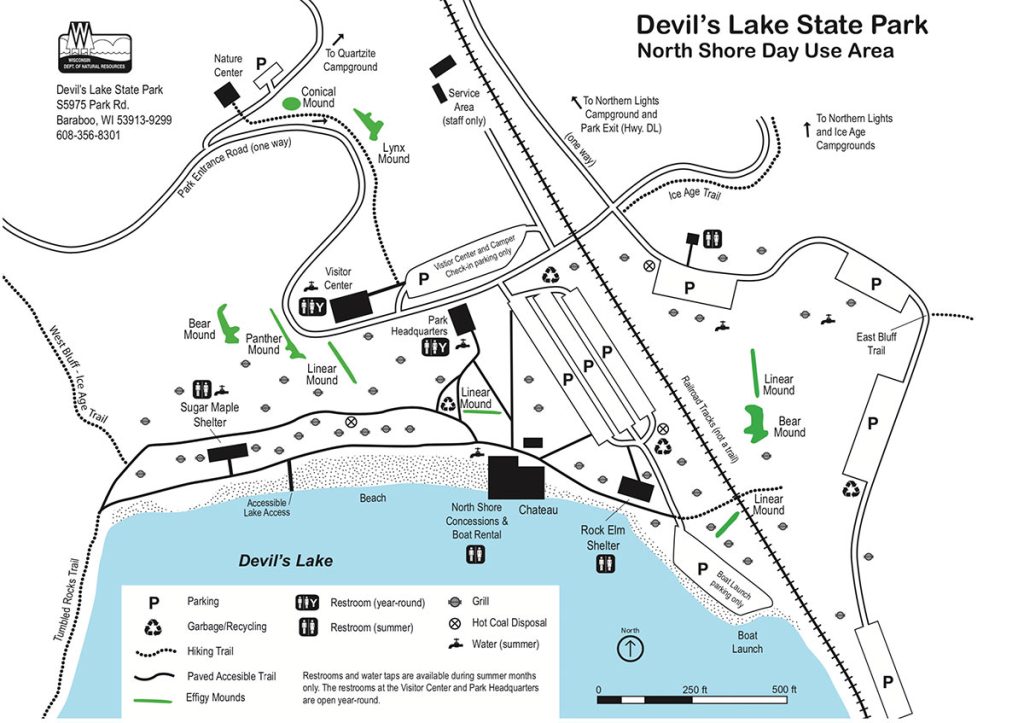
Schedule
| 7:30 AM | Check-in at Chazen |
| 7:45 AM | Departure |
| 9:20 AM | Arrival at White Pine Shelter |
| 9:30 AM | Balanced Rock Trail Hike with Guide |
| 12:30 PM | Lunch |
| 1:15 PM | Free Time |
| 3:40 PM | Board return bus |
| 4:00 pm | Depart |
| 5:10 PM | Arrive Chazen |
Devil’s Lake State Park is located in Baraboo, Wisconsin, and is Wisconsin’s most popular state park with about 3 million visitors per year. The over 10,000-acre park anchors more than 27,000 acres of parkland and natural areas open to public recreation in Sauk County. Historically Devil’s Lake or “Tewakącąk”, which means Spirit Lake, sits on ancestral Ho-Chunk land and contains ancient effigy mounds that are part of their cultural heritage.
Boat Rentals
Standup Board, Paddleboat & recreational kayak rentals are available through concessions on either side of the lake during the summer season.
- $100 refundable deposit
- Valid ID required
- Life jackets provided
- Rentals are available on a first come, first served basis. While both rental locations have a large selection of watercraft, availability may be an issue on busy days i.e. weekends/holidays.
- Specialized kayak available for people with disabilities. To reserve, please call ahead.
Prices:
- Single Kayak- $17.00 per hour
- Double Kayak- $ 25.00 per hour
- Paddle Boards- $22.00 per hour
- Paddle Pontoons – $35.00 per hour
ALL BOAT RENTALS ARE DEPENDENT ON AVAILABILITY, WEATHER & WIND CONDITIONS
*Please wear your life jacket anytime you are on the water!
A great motivator to stay on designated trails in Devil’s Lake is the possibility of brushing into these two forms of Nature’s revenge: wild parsnip & poison ivy. These plants are commonly found around the trails’ edge and unrequitedly abound the further off-trail one goes.
Wild Parsnip

You only need to brush your skin on Wild Parsnip to experience phytophotodermatitis, a sort of chemical burn that combines with the sunlight to cause you a world of suffering. The burn can come from touching the leaves, stems and fruits of wild parsnip. Once exposed, your skin will begin to itch and redden in 24 to 48 hours. In many cases, blisters will appear soon afterward. These blisters can ooze and and become infected. In time, the affected area can turn dark brown to almost black; healing can take up to two years. It’s nasty!
Poison Ivy

Poison Ivy, which has the awesome scientific of “Toxicodendron radicans”, is feared by hikers due to the irritating red rash it can cause if your skin comes in contact with the leaves. For most of us the itching, rash and swelling will slowly go away in a couple of weeks. If you get into it, wash your skin in warm, soapy water as soon as possible. Wash your clothing. Don’t scratch and give calamine lotion or hydrocortisone cream a try to sooth the itching. You may even want to try taking an antihistamine pill. If you experience severe blistering, fever, or difficulty breathing, seek medical treatment.
Identifying Poison Ivy
Kids who grew up in “outdoor” families were often taught the old, “Leaves of 3, leave it be!” warning. But, it’s not always that simple.. and there are quite a few plants out along the trails that are perfectly harmless, but have “leaves of three”. Jack-in-the-Pulpit and Raspberries are just two examples. Then to make things more confusing, poison ivy doesn’t always play by the rules. It “mostly” has leaves of three. Its leaves are usually jagged, but not always, sometimes shiny by not always, usually grows on the ground, but can vine up a tree as well! Oh, and in the autumn it’s one of the first plants to turn red! That said, once you look at enough of it, you’ll usually recognize poison ivy in all its forms.
The poison Ivy in the picture above is classic. This is what you’ll usually see lying in wait along the trails of Devil’s Lake State Park.
Devil’s Lake History
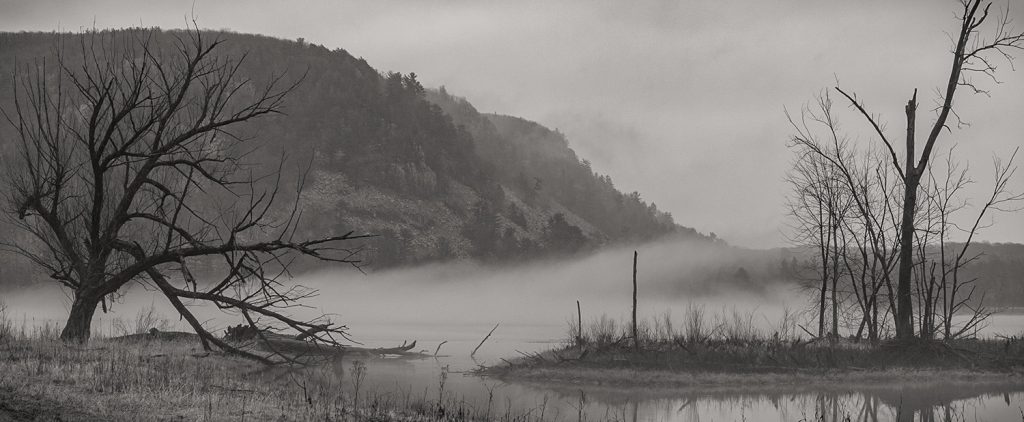
Tewakącąk
(Ta-wah-cun-chunk-dah)
On a cool foggy day, it’s not too hard to imagine why Devil’s Lake got its name. In fact, imagination probably had a lot to do with it. At the time when white trappers, then settlers were moving into the area, they learned from the local Ho-Chunk people that their name of the lake was Tewakącąk which roughly translated, meant “Sacred lake”. Sometimes this was also interpreted as “spirit” or “holy” lake. With a misunderstanding, and most likely some prejudice as well, the name “Devil’s Lake” came to be. While the Ho-Chunk consider the lake a sacred space, the early Europeans turned toward something more sinister.
-Kenneth Lange, Ancient Rocks And Vanished Glaciers
Oral History
Long ago — a good Ho-Chunk went on the bank of Tewakącąk lake, offering his devotions aloud and crying to the Supreme Being for twenty days, fasting — when he saw an animal resembling a cat rise up to the surface, hearing the Indian’s sorrow — told him he would help him to live a long and happy life. He did long live. The animal was called Wakjexira (wock-cheth-thwe-dah) — with long tail and horns. Many others also saw this animal.
-Smithsonian Institution, National Anthropological Archives 1885